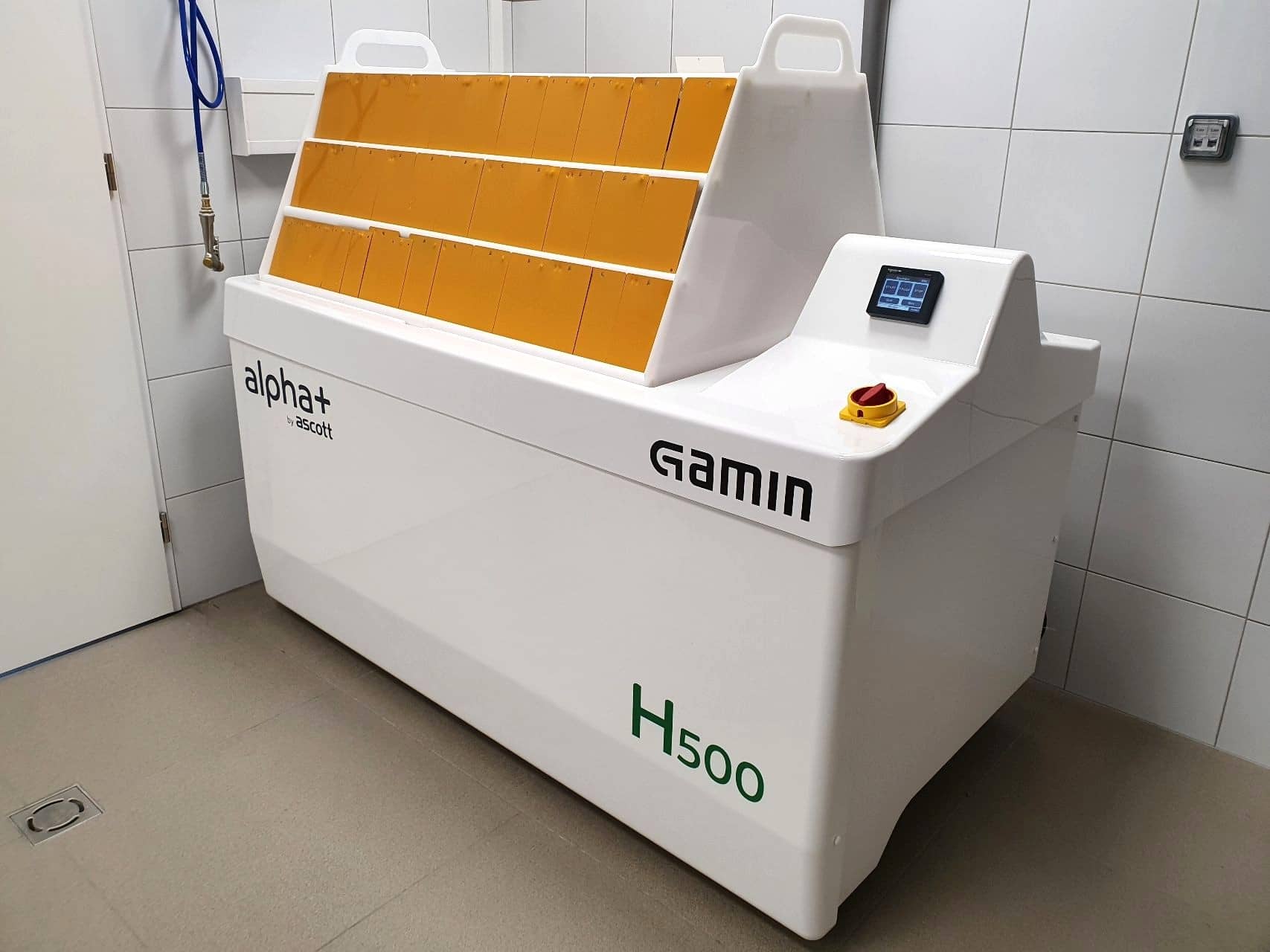
The condensation test according to ČSN EN ISO 6270 is among the most frequently used exposure tests in artificial atmospheres. Its principle is exposing test specimens to condensed water at an elevated temperature. Demineralized water is used in condensation chambers; it is stripped of ions, which ensures high purity and low conductivity.
The standard sets a maximum permissible conductivity value of 5 µS/cm, because water purity significantly affects both the course of the test and its reproducibility.This test can reliably reveal weak points in corrosion protection—such as insufficient coating adhesion on edges, local defects or microcracks in the coating, where rusting of the base metal or blistering may occur. The test is commonly used for components of household appliances and bathroom equipment, housings of electronic devices, or structural elements exposed to long-term moisture. It thus simulates environments where condensation, humidity, or water precipitation must be considered—such as rain, dew, or humidity in enclosed spaces.
Single-sided exposure according to ČSN EN ISO 6270-1
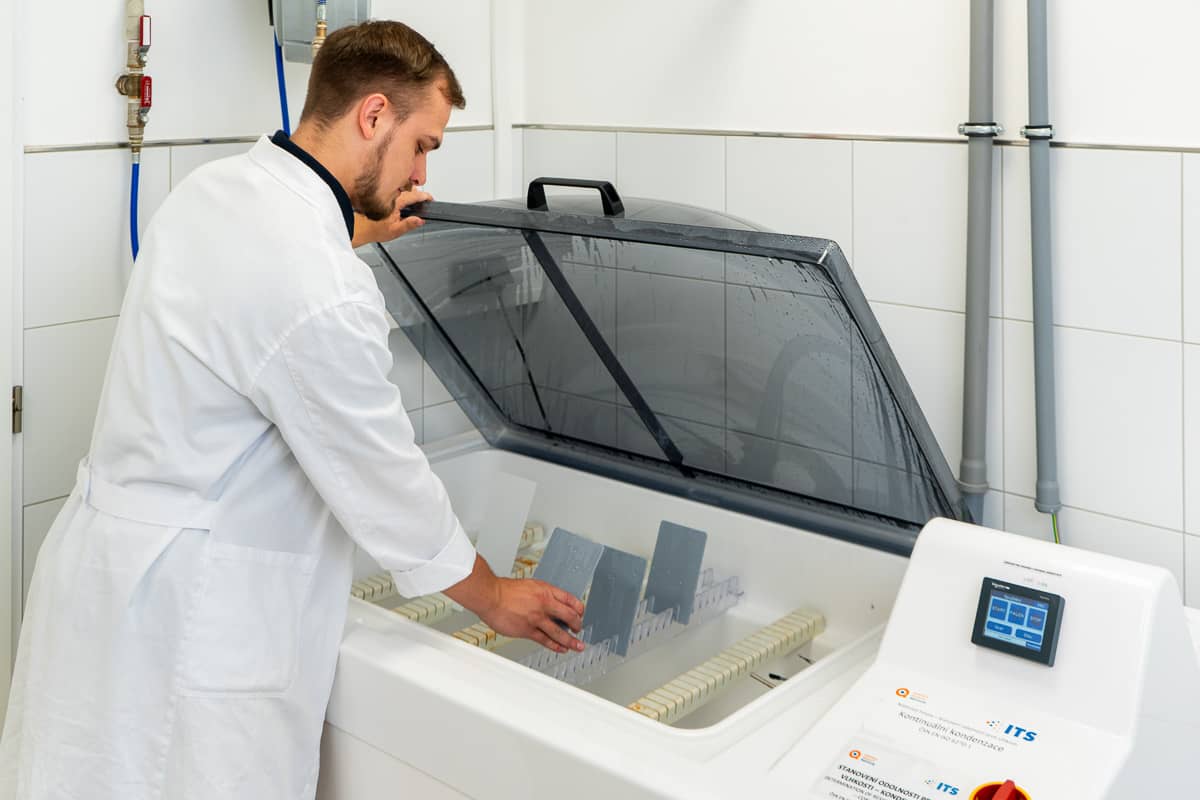
The ČSN EN ISO 6270 standard has two parts. The first part, ČSN EN ISO 6270-1, focuses on single-sided exposure. Specimens are subjected to elevated temperature and humidity from one side only, while the other side remains exposed to standard laboratory conditions. The test is carried out under constant conditions, without temperature or humidity cycling. To perform this test, a special lid with grooves is required, into which panels of defined dimensions and thickness are inserted. Once prepared, the lid is placed onto the condensation chamber and the test can begin. Single-sided exposure simulates situations where condensation occurs on only one side of a material—for example, on metal elements of roofing systems or inside electrical cabinets and distribution boards. In these applications, condensate may form on walls of the cabinet due to a combination of heat generated by operating electronics and a cooler surrounding environment.
Two-sided exposure according to ČSN EN ISO 6270-2
The second part of the standard, ČSN EN ISO 6270-2, describes two-sided exposure of specimens. It includes three test regimes that simulate different types of real-life stress and may lead to different degradation mechanisms of protective coatings:
CH regime – condensation atmosphere with constant humidity
Specimens are exposed to stable temperature and humidity throughout the test, resulting in continuous two-sided condensation. This simplest regime simulates environments with permanently high humidity without significant temperature fluctuations, such as laundries, basements, or certain parts of household appliances.AT regime– condensation atmosphere with alternating air temperature
In this case, the test runs in regular cycles. During the first cycle, an elevated temperature is maintained; then heating is switched off and the chamber remains insulated from surrounding environment during the second cycle, ensuring approximately 100% humidity. The specimen surfaces repeatedly become wet and then dry, which helps reveal defects sensitive to cyclic changes in conditions.AHT regime – condensation atmosphere with alternating humidity and air temperature
The most complex regime combines cycles of high temperature and humidity in a closed chamber with cycles under ambient conditions after the chamber is opened. This regime simulates environments with frequent changes—for example, demanding technological operations, environments around heat pumps or heat exchangers, or subtropical to tropical climates.
Evaluation after the test
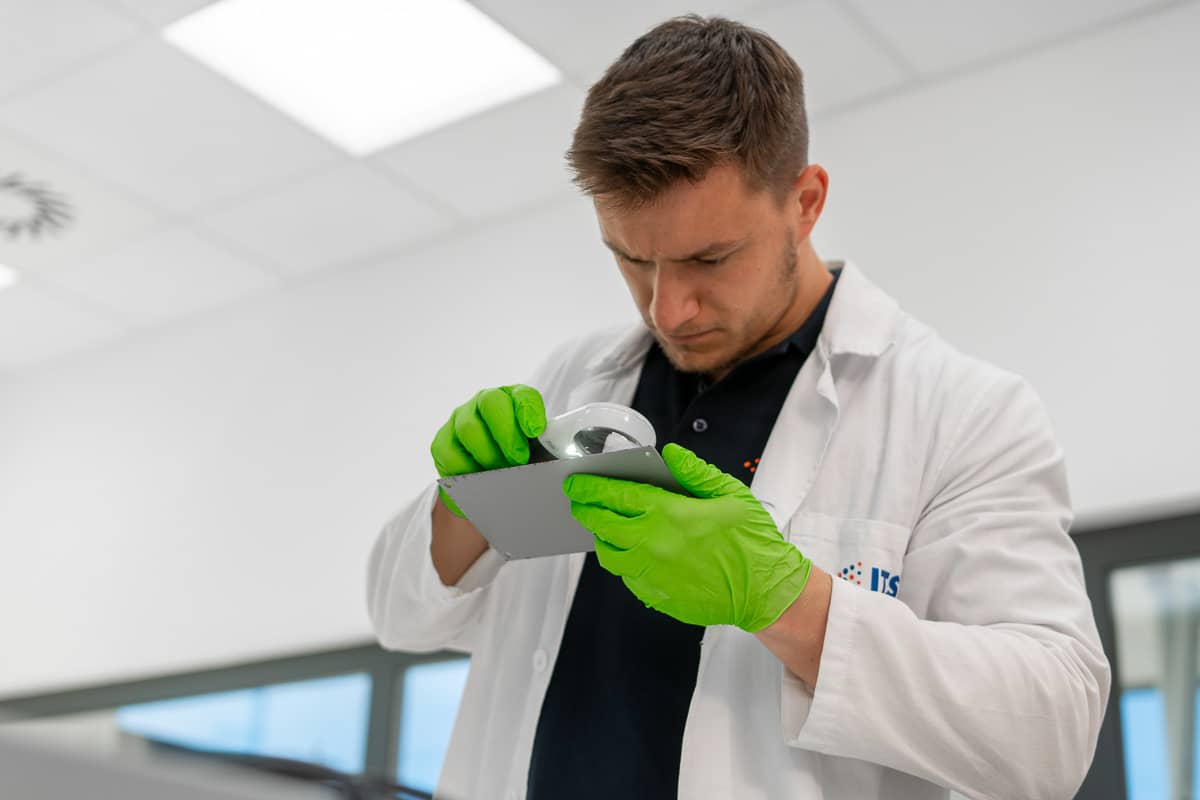
Evaluation after exposure tests is usually carried out in accordance with ČSN EN ISO 4628, specifically Parts 2, 3, 4, and 5. The occurrence of blisters, rusting, cracking, and flaking of the coating is assessed. If a cut was made on the specimens before testing, evaluation is also performed according to Part 8, where the degree of delamination and corrosion around the cut is assessed (possible reference/link to MaKe article). The evaluation often also includes a cross-cut test, which provides basic information about the adhesion of the coating system to the substrate.
At the SQI laboratory, we have extensive experience with exposure testing. Do you have questions or do you need to test your specimens in a condensation chamber? Feel free to contact us using the details below, and we will be happy to help you choose a suitable regime and interpret the results.
Do you know anyone who might be interested?